Hip pain
Groin pain, stiffness or reduced walking distance may need careful hip assessment.
Explore hip painSpecialist Private Orthopaedic Care
Hip, knee, arthritis, sports injuries and wider orthopaedic assessment, including selected orthobiologic options where clinically appropriate, with Mr Arpit Patel, Consultant Trauma & Orthopaedic Surgeon.
Not sure what is causing your pain? You do not need to know the diagnosis before getting in touch. A personalised consultation can help identify the likely cause, anticipate practical next steps and create a proactive plan.

What are you struggling with?
Many orthopaedic problems overlap. Hip pain can feel like back, groin or knee pain. Knee pain can occur because of arthritis, cartilage, ligament, alignment or referred symptoms. These routes are a useful starting point, not a diagnosis.
Groin pain, stiffness or reduced walking distance may need careful hip assessment.
Explore hip painSwelling, instability, stiffness or arthritis symptoms can be reviewed with the right imaging where appropriate.
Explore knee painUnderstand non-surgical care, injections and surgery only where clinically appropriate.
Explore arthritisAssessment for active adults with injury, lower limb pain or return-to-activity questions.
Explore sports injuryNumbness, tingling, locking or selected hand and wrist symptoms can be assessed.
Explore hand or wrist problemStart with assessment for pain, tendon symptoms, arthritis or sports-related concerns.
Explore foot or ankle problemIf surgery has been suggested, a second opinion may help you review the reasoning and alternatives.
Explore considering surgeryA consultation is a sensible first step when symptoms are unclear or do not fit one obvious diagnosis.
Explore not sure what is wrongGuidance
Orthopaedic symptoms can be difficult to interpret. Pain may come from joints, tendons, muscles, nerves, previous injuries or referred pain. A consultation helps identify the likely cause and the most sensible next step.
How a consultation helps
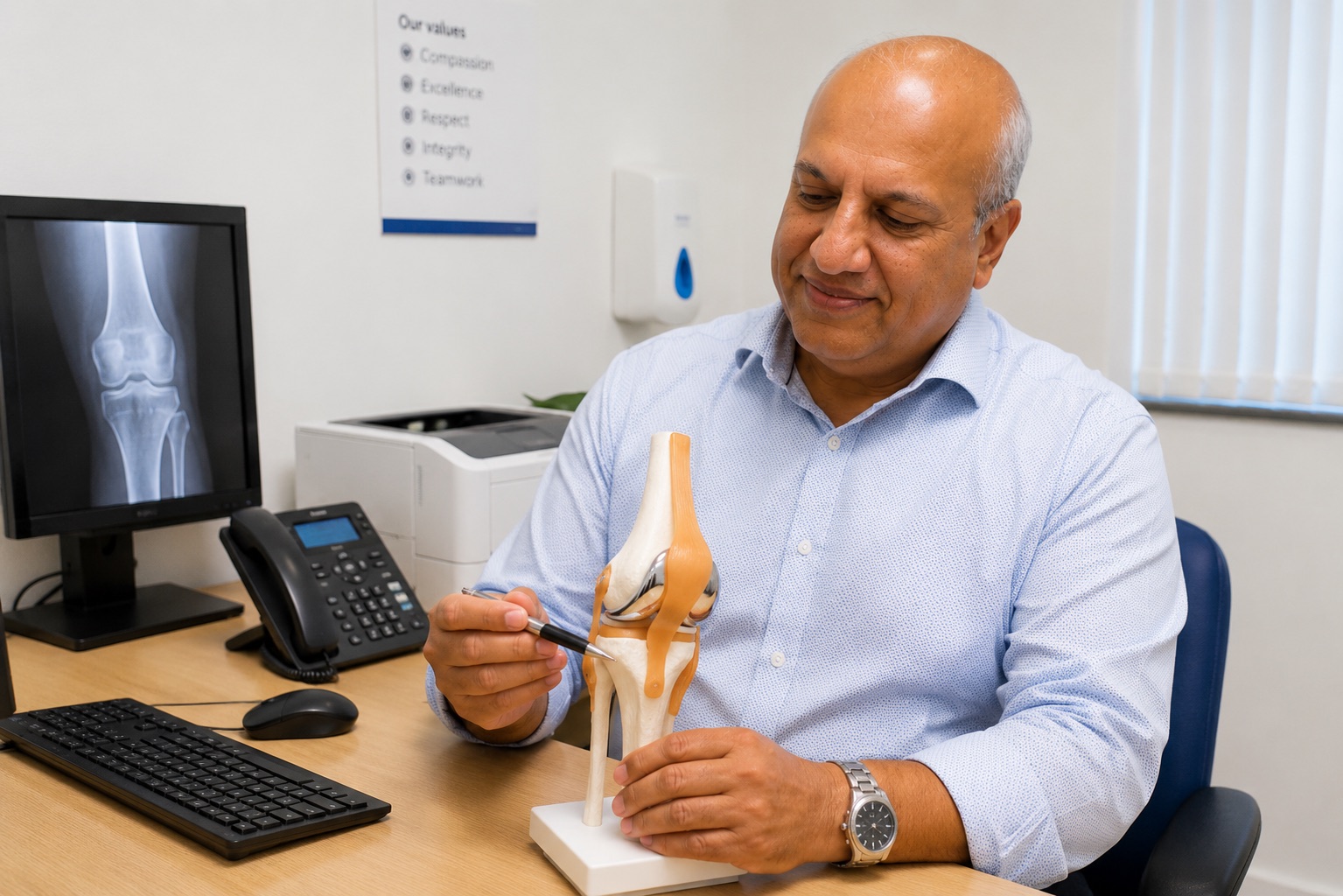
A private orthopaedic consultation is not just about deciding whether surgery is needed. It is a structured assessment designed to understand the likely cause of symptoms, the patient's priorities and the safest, most sensible next step. Where appropriate, Mr Patel helps patients plan proactively rather than waiting for symptoms to become harder to manage.
Start with what has changed, what you have already tried, what matters day to day and what you want to be able to do again.
A clinical examination can help clarify whether symptoms fit the joint, soft tissues, nerves or another source.
Previous X-rays, MRI reports, clinic letters or treatment advice can be reviewed where relevant.
Further investigations may be arranged when they are likely to help diagnosis or treatment planning.
Options may include reassurance, physiotherapy, injections, selected orthobiologic treatments, monitoring, surgery or onward referral.
The aim is to leave with clearer choices, an understanding of the risk-benefit balance of treatment options and a practical plan tailored to your symptoms, lifestyle and goals.
Common treatment routes
These pages explain common treatment pathways. Suitability depends on individual assessment, examination and imaging where appropriate.
For advanced hip arthritis or persistent symptoms after assessment and appropriate non-surgical care.
Read about hip replacementFor knee arthritis and reduced mobility when symptoms, imaging and goals support surgery.
Read about knee replacementTechnology-assisted planning and alignment can be considered in suitable knee surgery cases.
Read about robotic / navigated knee surgeryA minimally invasive option for selected knee problems where assessment supports it.
Read about knee arthroscopyAssessment, imaging review and a plan for activity, rehabilitation or treatment where needed.
Read about sports injury assessmentA blood-product injection that may be considered for selected conditions after assessment; evidence varies by condition.
Read about prp injectionsA selected orthobiologic option with limited evidence that requires careful discussion of uncertainty and alternatives.
Read about microfragmented adipose tissue (mfat)Assessment and selected procedures for carpal tunnel and specific hand or wrist concerns.
Read about carpal tunnel and hand proceduresWhy patients choose Mr Patel
The focus is on personalised, proactive care: helping patients understand the problem, the realistic options and the most appropriate next step after individual assessment.
Patients are assessed by a senior Consultant Trauma & Orthopaedic Surgeon, with advice shaped around symptoms, examination, imaging where appropriate, personal goals and individual circumstances.
Mr Patel can assess a wide range of orthopaedic concerns, including hip, knee, sports injury, arthritis, selected hand and wrist conditions, foot and ankle symptoms and second opinions.
His practice has a particular focus on hip and knee problems, including arthritis, joint replacement, knee arthroscopy and robotic or navigated knee surgery where appropriate.
A proactive plan may include physiotherapy, injections, selected orthobiologic options, monitoring, surgery or onward referral depending on the patient and condition.
The aim is to help patients understand, after assessment, what is causing their symptoms, what options exist and what next step makes sense without rushing decisions.
Private consultations are available through recognised hospital locations including Spire Cambridge Lea Hospital and Circle Reading Hospital.
Locations
Private appointments are available through recognised hospital locations. Exact booking routes and availability should be confirmed with the practice team.
Cambridge. Full appointment details are provided when booking is confirmed.
View Spire Cambridge Lea booking informationReading. Full appointment details are provided when booking is confirmed.
View Circle Reading booking informationPrivate orthopaedic care
Whether you are dealing with pain, reduced mobility, arthritis, injury or uncertainty about surgery, a private consultation can help you understand your options.