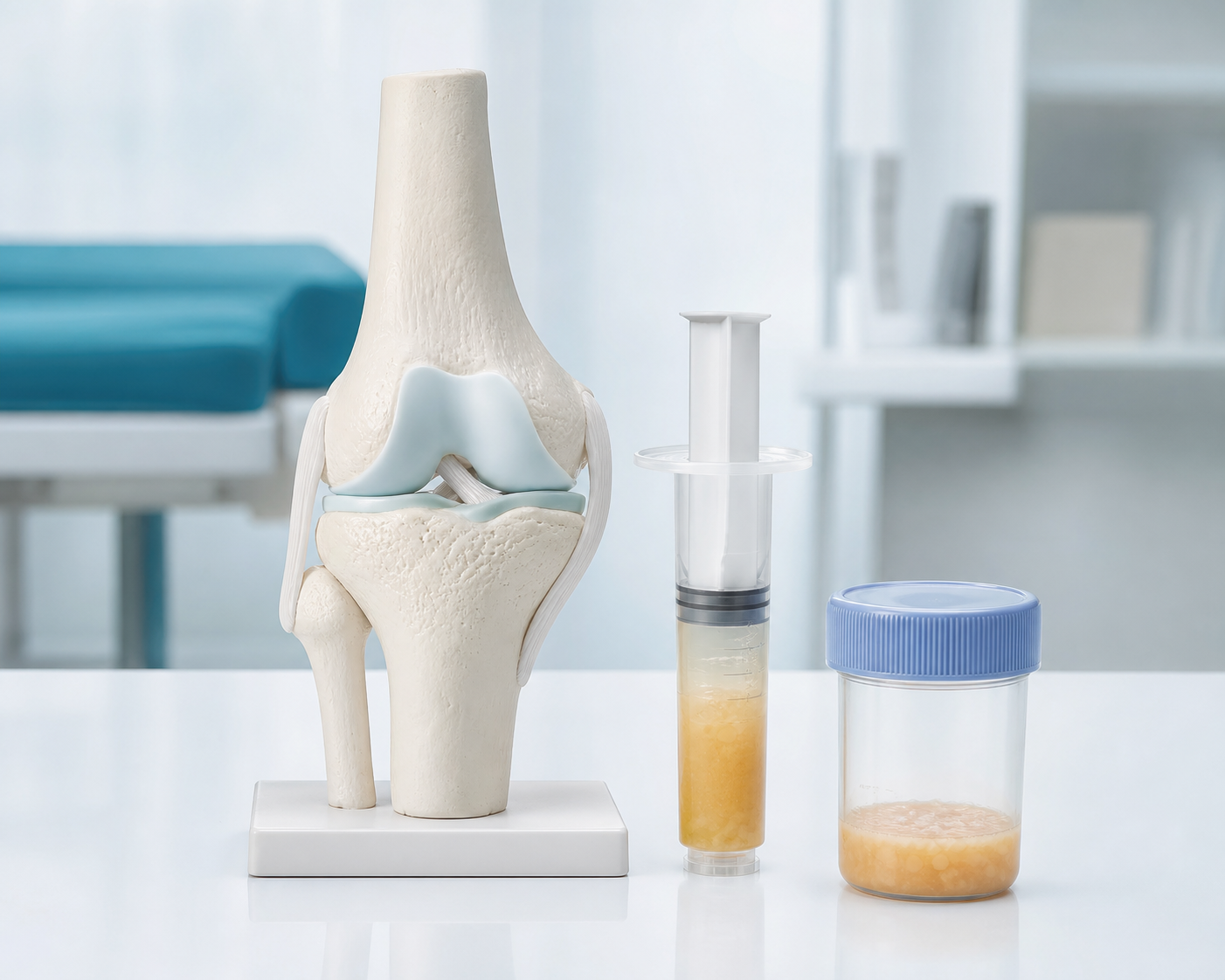
What is this treatment?
A small amount of fat is collected using a liposuction procedure, mechanically processed and then injected into the joint being treated. The resulting tissue contains a mixture of cell types. This is not the same as a laboratory-cultured stem-cell treatment.
Who this may help
- Patients with a confirmed diagnosis who want to understand the limited evidence for MFAT
- Patients with osteoarthritis who wish to compare available non-surgical and surgical options
- Patients whose health, medicines and treatment history allow the fat-collection and joint-injection procedures to be considered
- Patients who understand that treatment may provide no improvement
Why patients ask about this route
- Interest in an autologous tissue-based injection
- A wish to compare MFAT with rehabilitation, other injections or surgery
- Persistent symptoms despite conservative care
- A need for balanced information about evidence, costs, risks and uncertainty
How suitability is assessed
- Clinical assessment of diagnosis and symptom pattern
- Review of imaging and previous treatment
- Discussion of the limited evidence, uncertainty, limitations and alternative options
- Assessment of risks associated with both fat collection and joint injection
- Shared decision-making about whether MFAT is appropriate to consider
What happens before treatment?
- Diagnosis, symptom severity, imaging and previous treatment are reviewed
- Alternative non-surgical and surgical routes are compared where relevant
- Consent covers the uncertain benefit, costs, the possibility of no improvement and the separate risks of fat collection and injection
- The procedure setting, aftercare and rehabilitation plan are agreed before treatment is arranged
Treatment routes that may be discussed
- Rehabilitation and conservative care
- PRP or another injection where clinically appropriate
- MFAT where clinically appropriate after an evidence and risk discussion
- Surgical opinion if symptoms, imaging or goals suggest surgery may be needed
Next step
Ask which treatment options may be suitable
PRP, MFAT, Arthrosamid and other treatment options should only be discussed after assessment of symptoms, diagnosis, imaging where relevant and a balanced review of evidence, risks and uncertainty.
What happens after treatment?
Recovery involves both the fat-collection site and the injected joint. Temporary pain, swelling or bruising may occur, and activity modification or rehabilitation may form part of the aftercare plan.
Limitations, risks and realistic expectations
The British Orthopaedic Association reports that there are no high-quality trials demonstrating the effectiveness of MFAT for osteoarthritis. Lower-quality studies report symptom improvement, but the size, duration and cause of any benefit remain uncertain. MFAT has not been shown to restore cartilage, slow osteoarthritis or avoid joint replacement.
Risks can include pain, swelling, bruising, bleeding or infection at the fat-collection or injection site, risks related to anaesthetic, damage to surrounding tissue, no improvement and the need for further treatment.
What the evidence says
Evidence for MFAT in osteoarthritis remains limited. It should not be marketed as a proven stem-cell treatment or as a way to regrow cartilage, stop arthritis progressing or avoid joint replacement.
Authoritative references
Alternatives
- Physiotherapy and activity modification
- Medication or other injections where appropriate
- Joint replacement discussion for advanced arthritis where suitable
- Second opinion before choosing a treatment route
Next steps
- Book an assessment to confirm the diagnosis and discuss evidence that applies to it
- Compare MFAT with rehabilitation, other injections and surgery where relevant
- Request a second opinion if you are unsure about a proposed orthobiologic treatment
Related condition pages
Arthritis Care
Review symptoms, assessment routes and related treatment options.
Read about arthritis careSports Injuries
Review symptoms, assessment routes and related treatment options.
Read about sports injuriesHip Conditions
Review symptoms, assessment routes and related treatment options.
Read about hip conditionsKnee Conditions
Review symptoms, assessment routes and related treatment options.
Read about knee conditionsQuestions
Frequently asked questions
Is MFAT suitable for advanced arthritis?
Suitability depends on symptoms, imaging, previous treatment, health factors and goals. MFAT has not been shown to avoid joint replacement, and patients with advanced arthritis may need to discuss surgical options.
Is MFAT a proven stem-cell treatment?
No. MFAT is mechanically processed tissue containing a mixture of cell types. It should not be described as a proven stem-cell treatment, and evidence for treating osteoarthritis remains limited.
Can MFAT regrow cartilage or delay surgery?
MFAT has not been shown to regrow cartilage, slow osteoarthritis or avoid joint replacement. A consultation can compare its uncertain potential symptom benefit with other options.
Medical note: information on this page is general and does not replace individual medical advice. Treatment suitability and outcomes vary.