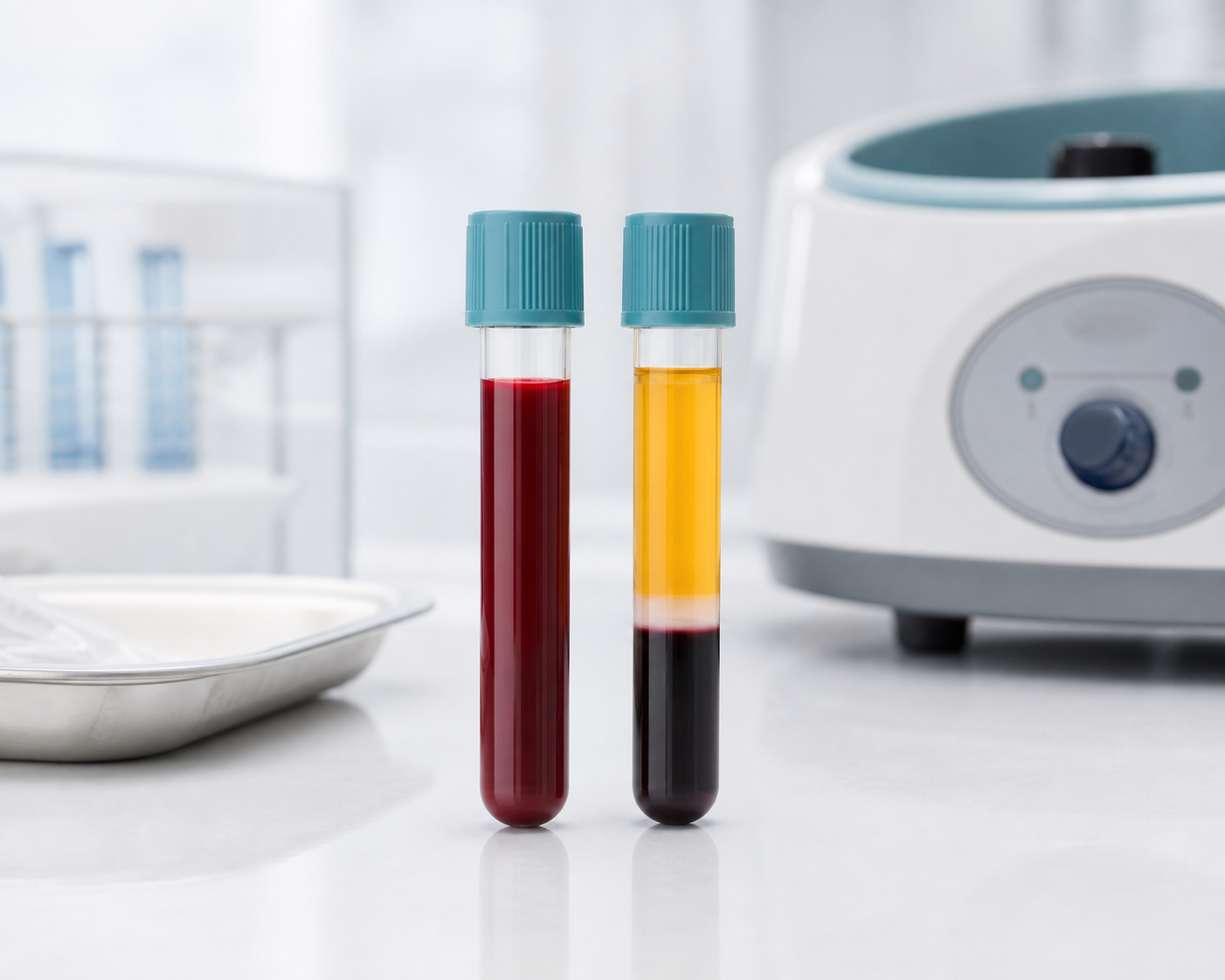
What is this treatment?
A sample of your own blood is collected and processed to produce plasma with a higher concentration of platelets, then injected into the area being treated. The amount collected depends on the preparation system and treatment plan. PRP preparations and injection techniques vary, so evidence about one preparation or condition may not apply to another.
Who this may help
- Adults with knee osteoarthritis who have had a diagnosis and want to discuss the limited evidence for symptom relief
- Patients with a specific tendinopathy where PRP or another autologous blood injection is being considered
- Patients who have already tried appropriate rehabilitation or other conservative care
- Patients who understand that suitability, evidence and expected benefit differ by condition
Why patients ask about this route
- Persistent symptoms despite appropriate first-line treatment
- A wish to compare injection options with rehabilitation or other care
- Uncertainty about what published evidence applies to a particular joint or tendon
- A need for balanced consent before deciding whether to proceed
How suitability is assessed
- A diagnosis-focused history and examination
- Review of imaging where it may change treatment planning
- Discussion of evidence for the specific joint or tendon rather than PRP in general
- Review of health factors, medicines and alternatives that may affect suitability
What happens before treatment?
- The diagnosis and treatment site are confirmed before PRP is considered
- The limits and uncertainty of the evidence, including long-term uncertainty for tendinopathy, are explained
- Consent covers alternatives, cost, preparation method, potential risks and the possibility of no improvement
- Where PRP is used for knee osteoarthritis or tendinopathy, NICE advises special arrangements for clinical governance, consent and audit or research
- Aftercare and any rehabilitation plan are agreed before the injection
Treatment routes that may be discussed
- Rehabilitation and load management
- PRP injection where clinically appropriate
- Other non-surgical treatment where appropriate
- Surgical assessment if symptoms or imaging suggest a different pathway
Next step
Ask which treatment options may be suitable
PRP, MFAT, Arthrosamid and other treatment options should only be discussed after assessment of symptoms, diagnosis, imaging where relevant and a balanced review of evidence, risks and uncertainty.
What happens after treatment?
Aftercare varies by injection site and diagnosis. Temporary activity modification and a condition-specific rehabilitation plan may be recommended.
Limitations, risks and realistic expectations
For knee osteoarthritis, NICE reports no major safety concerns but says the evidence on efficacy is limited in quality. For tendinopathy, NICE says evidence on efficacy remains inadequate, particularly in the long term. PRP has not been shown to restore cartilage or slow osteoarthritis, and there is a possibility of no improvement.
Risks can include a pain flare, bruising or bleeding, infection, damage to surrounding tissue, no improvement and the need for further treatment. Individual risks and any medicine changes must be discussed before treatment.
What the evidence says
PRP should not be presented as a single treatment with the same evidence for every condition. NICE recommends special governance, consent and outcome monitoring for its use in knee osteoarthritis and for autologous blood injection in tendinopathy because efficacy evidence is limited or inadequate.
Authoritative references
- NICE HTG497: Platelet-rich plasma injections for knee osteoarthritis
- NICE HTG299: Autologous blood injection for tendinopathy
- British Orthopaedic Association: Injectable orthobiologic treatments for osteoarthritis
Alternatives
- Physiotherapy and rehabilitation
- Activity modification
- Medication or another injection where clinically appropriate
- Surgical assessment where symptoms, examination and imaging support it
Next steps
- Book an assessment to confirm the diagnosis before considering PRP
- Ask what evidence applies to your particular condition and what is uncertain
- Compare PRP with rehabilitation, observation, other injections or surgery where relevant
Related condition pages
Sports Injuries
Review symptoms, assessment routes and related treatment options.
Read about sports injuriesArthritis Care
Review symptoms, assessment routes and related treatment options.
Read about arthritis careKnee Conditions
Review symptoms, assessment routes and related treatment options.
Read about knee conditionsFoot & Ankle Assessment
Review symptoms, assessment routes and related treatment options.
Read about foot & ankle assessmentQuestions
Frequently asked questions
Is PRP suitable for everyone?
No. Suitability depends on diagnosis, imaging, symptoms, health factors and previous treatment.
Can PRP be used instead of surgery?
PRP does not replace assessment and cannot be expected to avoid or delay surgery. Whether surgery should be considered depends on diagnosis, symptoms, imaging, previous treatment and individual goals.
Will I need scans before PRP?
Imaging may be needed to confirm diagnosis and suitability, depending on the condition.
Does PRP regrow cartilage?
PRP has not been shown to regrow cartilage or reverse osteoarthritis. Any discussion should focus on uncertain symptom benefit, alternatives and individual suitability.
Medical note: information on this page is general and does not replace individual medical advice. Treatment suitability and outcomes vary.