What is this treatment?
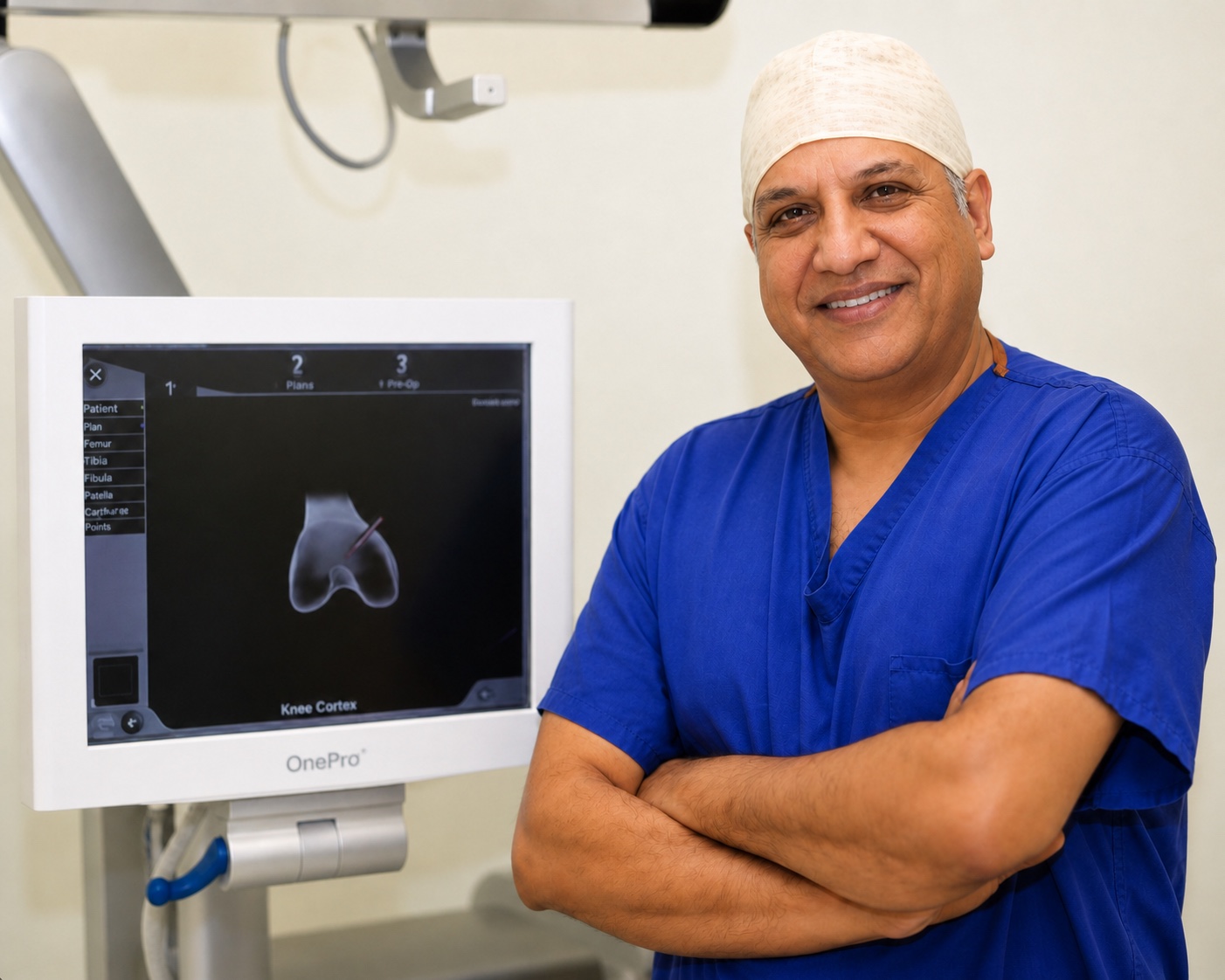
Robotic and navigated knee surgery use technology to support planning, alignment or intra-operative guidance in selected knee operations. The technology does not replace clinical judgement or remove surgical risk.
Who this may help
- Patients considering knee replacement
- Patients who want to understand technology-assisted options
- Patients seeking a second opinion about knee surgery
- Patients suitable for the relevant hospital pathway and procedure
Why patients ask about this route
- Interest in surgical planning and alignment
- Knee arthritis where replacement is being considered
- Previous recommendation for knee surgery
- Desire to compare surgical approaches
How suitability is assessed
- Review of knee arthritis pattern and imaging
- Discussion of surgical options and hospital availability
- Explanation of where navigation or robotic assistance may be relevant
- Balanced review of expected benefits, limitations and risks
What happens before treatment?
- Suitability for knee surgery is assessed first
- The relevant hospital pathway and technology availability are confirmed
- Conventional, navigated and robotic-assisted options are compared where relevant
- Risks, limitations and recovery expectations are discussed before deciding
Treatment routes that may be discussed
- Conventional knee replacement techniques
- Navigated knee surgery where appropriate
- Robotic-assisted knee surgery where appropriate and available
- Non-surgical care if surgery is not yet suitable
Second opinion
Considering surgery? Request a second opinion
If surgery, injections or a treatment plan have already been suggested, a second opinion can help you review the reasoning, alternatives and next steps before deciding.
What happens after treatment?
Recovery still depends on the underlying procedure, rehabilitation, general health and individual healing.
Limitations, risks and realistic expectations
Technology-assisted surgery may support planning and precision, but it does not remove surgical risk and does not ensure a specific result.
The risks are those of the knee procedure itself, including infection, clots, stiffness, ongoing pain and revision surgery, plus any technology-specific considerations discussed at consultation.
Alternatives
- Conventional knee replacement
- Continuing non-surgical care
- Second opinion review before deciding
Next steps
- Book a consultation to discuss whether technology-assisted surgery is relevant
- Request a second opinion if you want to compare surgical approaches
- Bring imaging and previous recommendations where available
Related condition pages
Knee Conditions
Review symptoms, assessment routes and related treatment options.
Open pageArthritis Care
Review symptoms, assessment routes and related treatment options.
Open pageQuestions
Frequently asked questions
Is robotic knee surgery suitable for every patient?
No. Suitability depends on the patient, diagnosis, procedure, hospital pathway and technology availability.
Does navigation ensure a better outcome?
No. It may support aspects of surgical planning and execution, but individual outcomes vary and risks remain.
Can I compare surgical approaches before deciding?
Yes. A consultation or second opinion can help explain the options in context.
Medical note: information on this page is general and does not replace individual medical advice. Treatment suitability and outcomes vary.