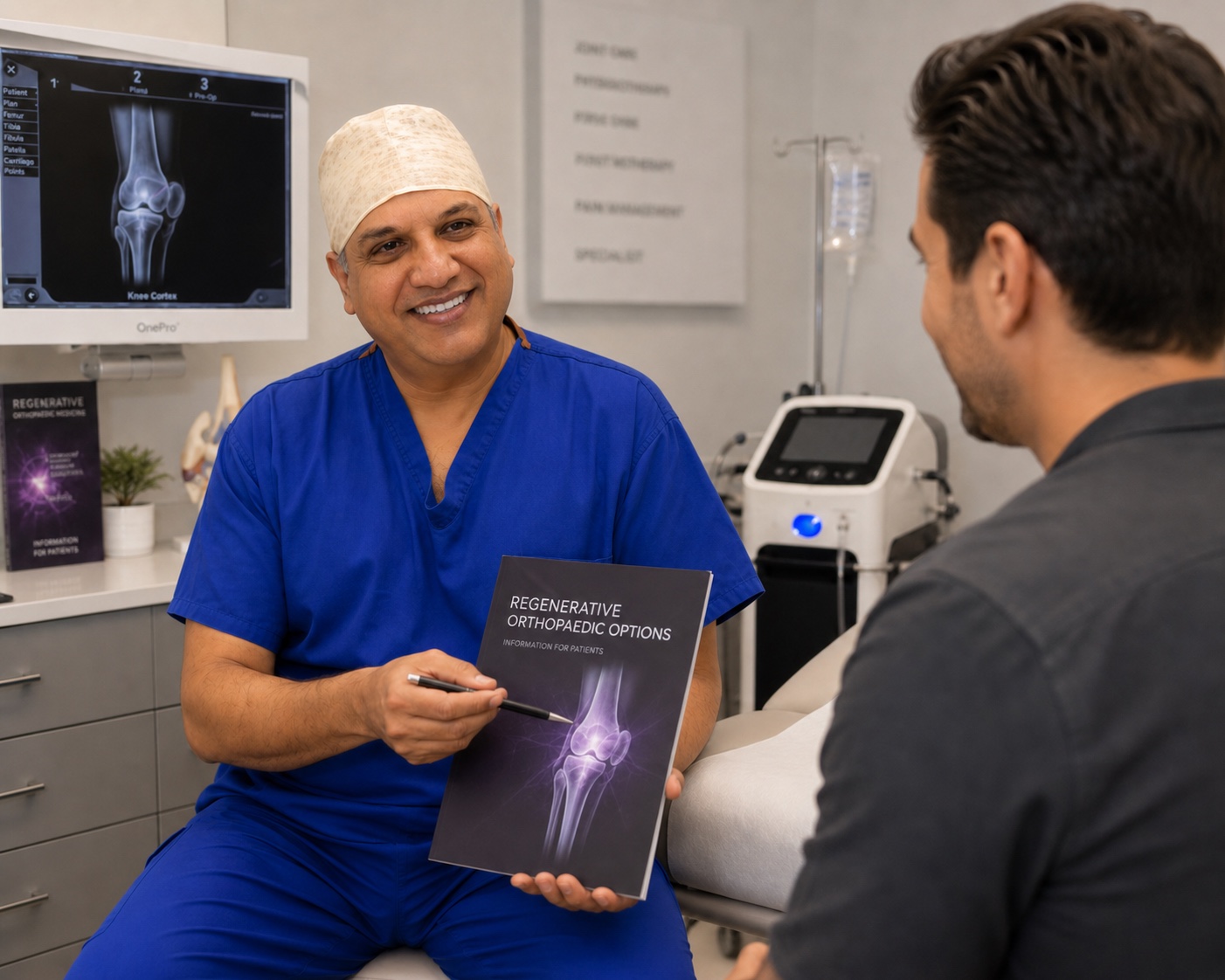
What is this treatment?
PRP uses a sample of the patient's own blood, processed to concentrate platelets, before injection into a selected area. It is considered only where diagnosis and suitability support it.
Who this may help
- Patients with selected tendon or soft tissue symptoms
- Patients exploring non-surgical options for joint symptoms
- Active adults with persistent sports-related symptoms
- Patients who want a careful discussion of evidence, suitability and alternatives
Why patients ask about this route
- Persistent tendon pain
- Selected joint symptoms
- Desire to understand non-surgical options
- Interest in understanding options before decisions about surgery
How suitability is assessed
- Diagnosis-focused history and examination
- Review of imaging where relevant
- Discussion of evidence, limitations and realistic goals
- Assessment of whether PRP is suitable or whether another option is better
What happens before treatment?
- The likely diagnosis is reviewed carefully before discussing PRP
- Imaging may be needed if it would change treatment planning
- Evidence, limitations, cost and alternative options are discussed
- Aftercare and activity modification are agreed before the injection
Treatment routes that may be discussed
- Rehabilitation and load management
- PRP injection where clinically appropriate
- Alternative injections where appropriate
- Surgical assessment if symptoms or imaging suggest a different pathway
Next step
Ask whether non-surgical options may be suitable
PRP, regenerative treatments and other non-surgical options should only be discussed after assessment of symptoms, diagnosis, imaging where relevant and realistic expectations.
What happens after treatment?
Aftercare varies by injection site and condition. Patients usually need a guided plan for activity modification and rehabilitation.
Limitations, risks and realistic expectations
Regenerative or injection-based treatments may be considered for selected patients after assessment. Suitability depends on the condition, severity of symptoms, imaging findings, previous treatment and individual goals.
Risks can include pain flare, bruising, infection, no improvement and need for further treatment. Suitability and risks are discussed before treatment.
Alternatives
- Physiotherapy and rehabilitation
- Activity modification
- Steroid or other injections where suitable
- Surgery only where appropriate after assessment
Next steps
- Ask whether non-surgical options may be suitable for your symptoms
- Book a consultation to review diagnosis, imaging and realistic treatment choices
- Do not assume PRP is suitable before assessment
Related condition pages
Sports Injuries
Review symptoms, assessment routes and related treatment options.
Open pageArthritis Care
Review symptoms, assessment routes and related treatment options.
Open pageKnee Conditions
Review symptoms, assessment routes and related treatment options.
Open pageFoot & Ankle Assessment
Review symptoms, assessment routes and related treatment options.
Open pageQuestions
Frequently asked questions
Is PRP suitable for everyone?
No. Suitability depends on diagnosis, imaging, symptoms, health factors and previous treatment.
Can PRP be used instead of surgery?
PRP may be part of non-surgical care for selected patients, but it is not a substitute for assessment and is not suitable for every condition.
Will I need scans before PRP?
Imaging may be needed to confirm diagnosis and suitability, depending on the condition.
Medical note: information on this page is general and does not replace individual medical advice. Treatment suitability and outcomes vary.