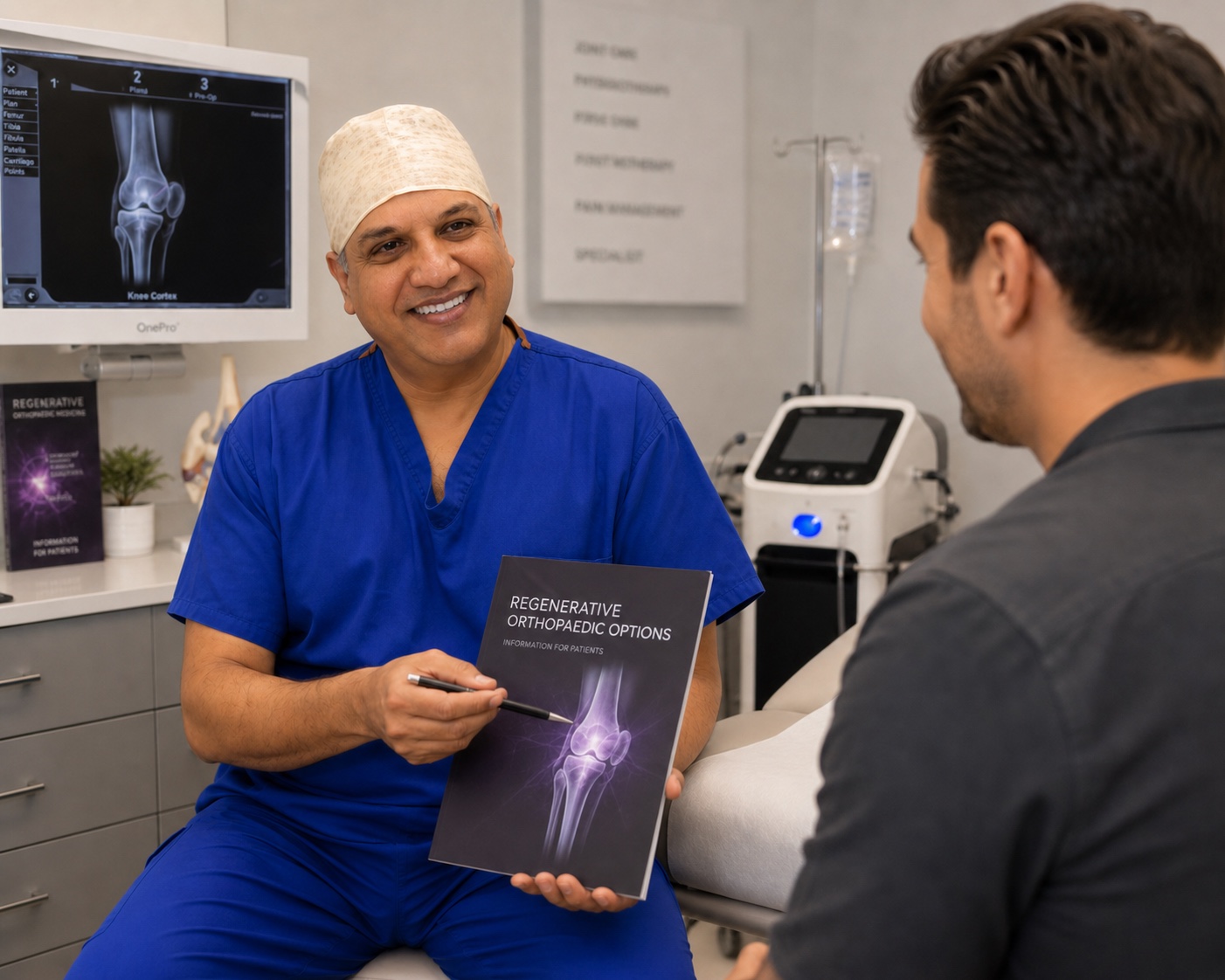
What is this treatment?
Regenerative orthopaedic options may involve biological or tissue-based treatments. They should be discussed as part of a wider treatment plan, with careful attention to evidence, suitability, limitations and alternatives.
Who this may help
- Patients exploring non-surgical options for selected joint symptoms
- Patients with arthritis who want to understand alternatives and timing
- Patients with sports or soft tissue symptoms where regenerative options may be considered
- Patients seeking a balanced discussion before treatment
Why patients ask about this route
- Interest in regenerative orthopaedics
- Desire to understand options before surgery
- Persistent symptoms despite conservative care
- Need for a suitability discussion rather than online promises
How suitability is assessed
- Clinical assessment of diagnosis and symptom pattern
- Review of imaging and previous treatment
- Discussion of evidence, uncertainty, limitations and alternative options
- Shared decision-making about whether regenerative treatment is appropriate
What happens before treatment?
- Diagnosis, symptom severity and imaging are reviewed before discussing treatment
- Alternative non-surgical and surgical routes are compared where relevant
- Evidence, uncertainty, limitations and costs are explained carefully
- The aftercare plan is agreed before any procedure is arranged
Treatment routes that may be discussed
- Rehabilitation and conservative care
- PRP or other injections where suitable
- Stem cell or regenerative options where clinically appropriate
- Surgical opinion if symptoms, imaging or goals suggest surgery may be needed
Next step
Ask whether non-surgical options may be suitable
PRP, regenerative treatments and other non-surgical options should only be discussed after assessment of symptoms, diagnosis, imaging where relevant and realistic expectations.
What happens after treatment?
Aftercare depends on the treatment and condition. Activity modification and rehabilitation may be part of the plan.
Limitations, risks and realistic expectations
Regenerative or injection-based treatments may be considered for selected patients after assessment. Suitability depends on the condition, severity of symptoms, imaging findings, previous treatment and individual goals.
Risks and limitations vary by procedure and patient. They can include discomfort, bruising, infection, no improvement and need for further treatment.
Alternatives
- Physiotherapy and activity modification
- Medication or other injections where appropriate
- Joint replacement discussion for advanced arthritis where suitable
- Second opinion before choosing a treatment route
Next steps
- Ask whether non-surgical options may be suitable after assessment
- Book a consultation to compare regenerative options with other routes
- Request a second opinion if you are unsure about a proposed treatment plan
Related condition pages
Arthritis Care
Review symptoms, assessment routes and related treatment options.
Open pageSports Injuries
Review symptoms, assessment routes and related treatment options.
Open pageHip Conditions
Review symptoms, assessment routes and related treatment options.
Open pageKnee Conditions
Review symptoms, assessment routes and related treatment options.
Open pageQuestions
Frequently asked questions
Are regenerative treatments suitable for advanced arthritis?
Suitability depends on symptoms, imaging and goals. Some patients with advanced arthritis may need to discuss surgical options instead.
Do regenerative treatments work for everyone?
No. Outcomes vary and no treatment should be presented as suitable or effective for every patient.
Can I compare regenerative treatment with surgery?
Yes. A consultation or second opinion can help compare realistic options.
Medical note: information on this page is general and does not replace individual medical advice. Treatment suitability and outcomes vary.