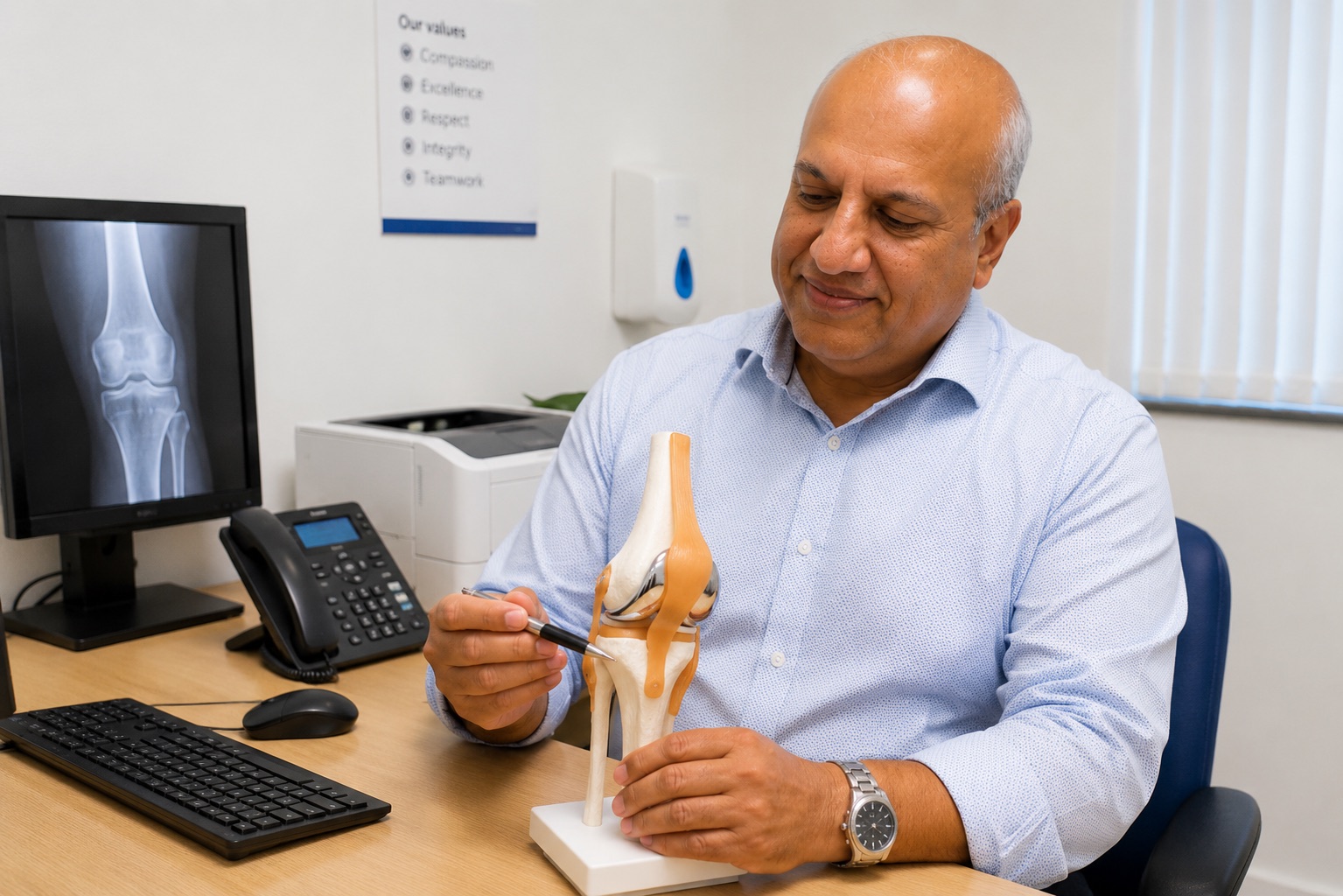
What is this treatment?
Knee replacement is an operation to replace worn or damaged knee joint surfaces. Depending on the arthritis pattern and suitability, discussion may include partial or total knee replacement.
Who this may help
- Patients with knee arthritis affecting walking, stairs or sleep
- Patients with pain despite physiotherapy, medication or injections
- Patients with bowing, stiffness or loss of confidence
- Patients seeking advice before committing to surgery
Why patients ask about this route
- Daily knee pain
- Swelling or stiffness
- Reduced walking distance
- Difficulty with stairs, kneeling or standing for long periods
How suitability is assessed
- Clinical history and examination
- Review of X-rays or MRI where relevant
- Discussion of non-surgical care and surgical options
- Consideration of navigated or robotic-assisted techniques where appropriate
What happens before treatment?
- Symptoms, function, alignment and imaging are reviewed together
- Non-surgical care and timing of surgery are discussed
- Procedure type, hospital pathway, risks and rehabilitation expectations are explained
- Insurance or self-pay requirements can be clarified before treatment
Treatment routes that may be discussed
- Physiotherapy, strengthening and activity changes
- Medication or injections where suitable
- Partial or total knee replacement depending on findings and suitability
- Second opinion review before surgery
Second opinion
Considering surgery? Request a second opinion
If surgery, injections or a treatment plan have already been suggested, a second opinion can help you review the reasoning, alternatives and next steps before deciding.
What happens after treatment?
Recovery typically involves early mobilisation, physiotherapy and gradual return to daily activity. The exact timetable varies by patient and procedure.
Limitations, risks and realistic expectations
Knee replacement can be considered to reduce arthritis-related pain and improve function, but recovery requires rehabilitation and individual outcomes vary.
Risks can include infection, blood clots, stiffness, ongoing pain, instability, implant wear, revision surgery and anaesthetic risks. These are discussed in detail before surgery.
Alternatives
- Continuing non-surgical care
- Targeted physiotherapy and weight management where relevant
- Injections where clinically appropriate
- Knee arthroscopy only for selected indications, not as a general arthritis treatment
Next steps
- Book an assessment if knee arthritis is limiting walking, stairs or sleep
- Request a second opinion if knee replacement has already been proposed
- Bring previous imaging, reports and treatment history where available
Related condition pages
Knee Conditions
Review symptoms, assessment routes and related treatment options.
Open pageArthritis Care
Review symptoms, assessment routes and related treatment options.
Open pageQuestions
Frequently asked questions
Is knee replacement the only option for knee arthritis?
No. Non-surgical options may be appropriate for some patients. Surgery is considered after assessment of symptoms, imaging and goals.
What is the difference between partial and total knee replacement?
The appropriate procedure depends on which parts of the knee are affected, alignment, ligament status and overall suitability.
Can I ask about robotic or navigated knee surgery?
Yes. Navigated or robotic-assisted approaches can be discussed where clinically appropriate and available.
Medical note: information on this page is general and does not replace individual medical advice. Treatment suitability and outcomes vary.