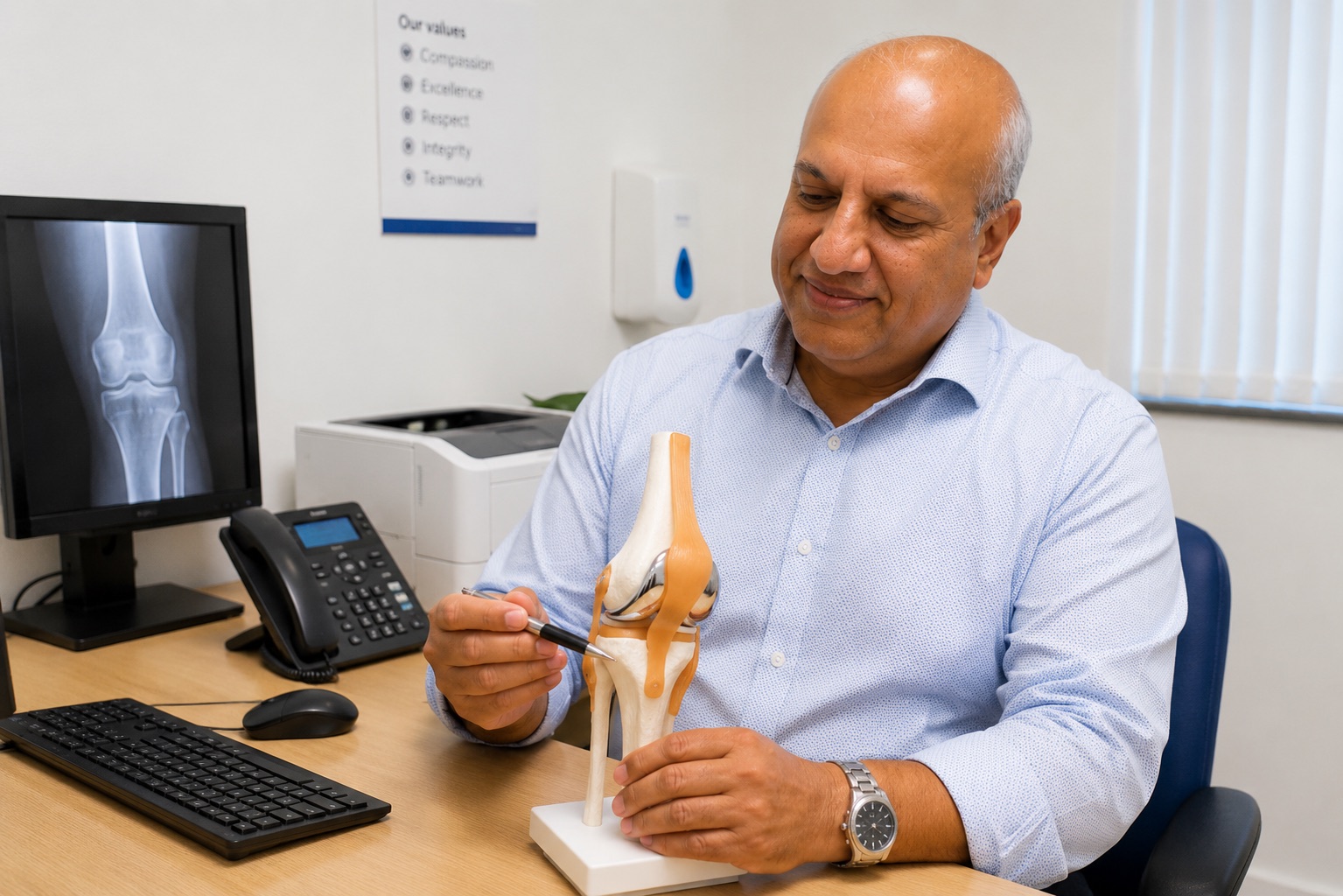
What is this treatment?
Knee arthroscopy is a minimally invasive keyhole procedure using a small camera and instruments inside the knee. It may be relevant for selected mechanical symptoms, but is not a general treatment for arthritis pain.
Who this may help
- Patients with selected meniscus symptoms
- Patients with catching, locking or mechanical symptoms after assessment
- Patients with sports-related knee injury requiring specialist review
- Patients whose imaging and examination support a suitable indication
Why patients ask about this route
- Catching or locking symptoms
- Swelling after injury
- Meniscus-type pain
- Persistent symptoms despite appropriate non-surgical care
How suitability is assessed
- Detailed symptom and injury history
- Knee examination
- Review of MRI or arrangement of imaging where suitable
- Discussion of whether arthroscopy, rehabilitation or another pathway is appropriate
What happens before treatment?
- Symptoms and examination are reviewed to check whether arthroscopy is likely to be appropriate
- MRI or other imaging may be reviewed or arranged
- Non-surgical alternatives and realistic expectations are discussed
- The exact procedure, risks and rehabilitation plan are explained before treatment
Treatment routes that may be discussed
- Physiotherapy and rehabilitation
- Activity modification
- Knee arthroscopy for selected indications
- Alternative surgery or onward referral if needed
Second opinion
Considering surgery? Request a second opinion
If surgery, injections or a treatment plan have already been suggested, a second opinion can help you review the reasoning, alternatives and next steps before deciding.
What happens after treatment?
Recovery depends on the exact procedure and findings. Rehabilitation and gradual return to activity are usually important.
Limitations, risks and realistic expectations
Arthroscopy may help selected mechanical knee symptoms, but it is not a general solution for arthritis-related pain and outcomes vary.
Risks can include infection, blood clots, stiffness, ongoing symptoms, further surgery and anaesthetic risks.
Alternatives
- Structured rehabilitation
- Observation and symptom management
- Injections where suitable
- Knee replacement discussion if arthritis is the dominant issue
Next steps
- Book assessment for persistent mechanical knee symptoms or sports-related knee pain
- Request a second opinion if arthroscopy has already been suggested
- Bring MRI reports or previous clinic letters where available
Related condition pages
Knee Conditions
Review symptoms, assessment routes and related treatment options.
Open pageSports Injuries
Review symptoms, assessment routes and related treatment options.
Open pageQuestions
Frequently asked questions
Is arthroscopy used for knee arthritis?
Arthroscopy is not usually a general treatment for arthritis pain. It may be relevant only for selected symptoms after assessment.
Do I need an MRI first?
MRI may be useful in some cases, but the need for imaging depends on symptoms and examination.
Can sports knee injuries be assessed?
Yes. Assessment can review symptoms, imaging and treatment options, including rehabilitation and selected procedures.
Medical note: information on this page is general and does not replace individual medical advice. Treatment suitability and outcomes vary.