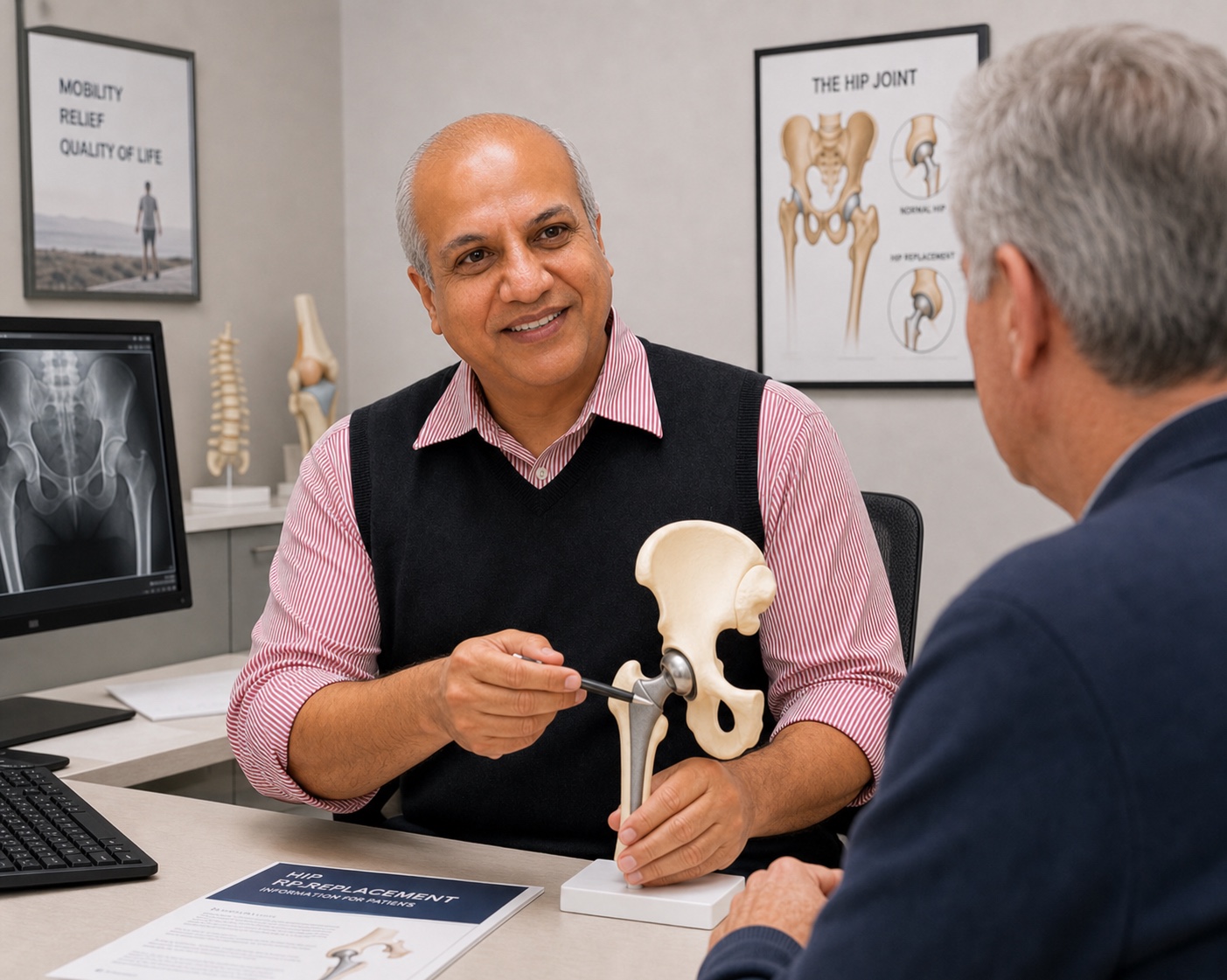
What is this treatment?
Hip replacement is an operation to replace the damaged ball-and-socket surfaces of the hip joint with artificial components. It is usually discussed for advanced arthritis or joint damage after assessment.
Who this may help
- Patients with hip arthritis affecting walking, sleep or independence
- Patients with groin pain and reduced hip movement
- Patients who have tried appropriate non-surgical options without enough improvement
- Patients seeking a second opinion before deciding on surgery
Why patients ask about this route
- Progressive pain or stiffness
- Reduced walking distance
- Difficulty with shoes, socks, stairs or getting in and out of a car
- Loss of confidence with everyday movement
How suitability is assessed
- Clinical history and examination
- Review of X-rays, MRI or previous reports where available
- Discussion of non-surgical options and timing of surgery
- Individualised discussion of risks, benefits and recovery expectations
What happens before treatment?
- Diagnosis and imaging are reviewed to confirm whether surgery is a reasonable option
- Non-surgical options and timing are discussed before committing to an operation
- Hospital pathway, consent, anaesthetic considerations and likely recovery are explained
- Patients are encouraged to bring previous scans, letters and questions
Treatment routes that may be discussed
- Activity modification, physiotherapy and medication where appropriate
- Image-guided injections in selected cases
- Hip replacement where clinically suitable
- Second opinion review if surgery has already been recommended
Second opinion
Considering surgery? Request a second opinion
If surgery, injections or a treatment plan have already been suggested, a second opinion can help you review the reasoning, alternatives and next steps before deciding.
What happens after treatment?
Recovery planning includes hospital pathway, wound care, mobility, physiotherapy and return to activities. The exact plan depends on the patient, hospital and procedure.
Limitations, risks and realistic expectations
The aim of hip replacement is usually to reduce arthritis-related pain and improve function, but individual outcomes and recovery times vary. All surgical procedures carry risk.
Risks can include infection, blood clots, dislocation, fracture, leg length difference, ongoing pain, implant wear, revision surgery and anaesthetic risks. These are discussed during consultation.
Alternatives
- Continuing non-surgical care
- Physiotherapy-led strengthening and mobility work
- Medication review through appropriate clinicians
- Injections where clinically appropriate
Next steps
- Book a private consultation if hip pain or stiffness is limiting daily life
- Request a second opinion if hip replacement has already been recommended
- Bring X-rays, MRI reports or previous letters where available
Related condition pages
Hip Conditions
Review symptoms, assessment routes and related treatment options.
Open pageArthritis Care
Review symptoms, assessment routes and related treatment options.
Open pageQuestions
Frequently asked questions
How do I know if I am ready for hip replacement?
Readiness depends on symptoms, imaging, previous treatment, health status and personal priorities. A consultation can help weigh these factors.
Can I have a second opinion before hip replacement?
Yes. A second opinion can review your symptoms, imaging and previous recommendation before you make a decision.
Is hip replacement suitable for everyone with arthritis?
No. Suitability depends on individual assessment, symptom severity, imaging and overall health.
Medical note: information on this page is general and does not replace individual medical advice. Treatment suitability and outcomes vary.