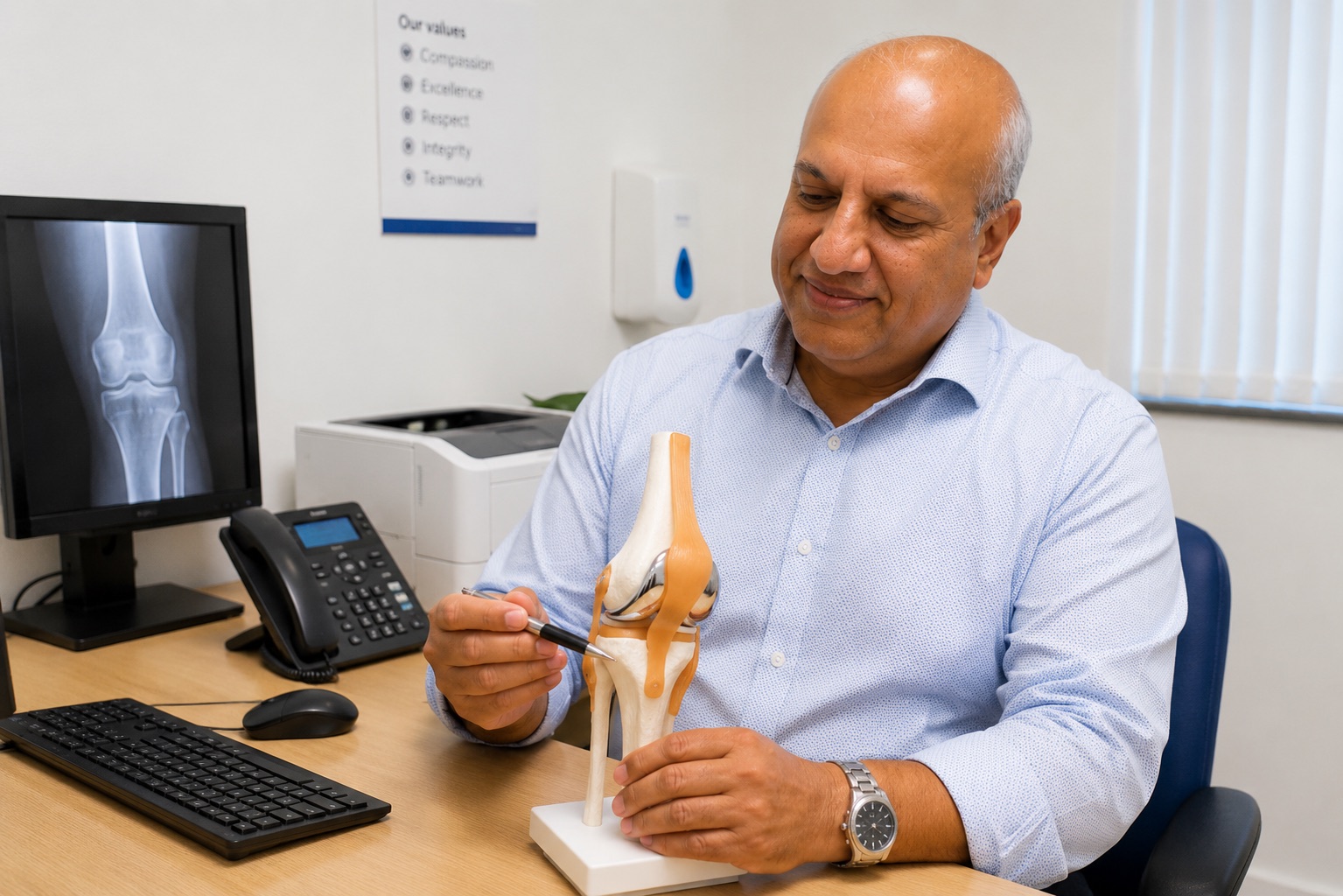
What is this treatment?
Arthrosamid consists of 2.5% cross-linked polyacrylamide and 97.5% sterile water. It is injected into the knee joint and integrates with the synovial tissue lining the joint capsule. It is not a steroid, hyaluronic acid, PRP or stem-cell treatment, and it has not been shown to regrow cartilage or reverse osteoarthritis.
Who this may help
- Adults with a confirmed diagnosis of knee osteoarthritis and persistent symptoms despite appropriate initial care
- Patients who want to compare a non-absorbable hydrogel implant with rehabilitation, medication, other injections or surgery
- Patients whose previous knee procedures, injections, medicines and health factors do not make the implant unsuitable
- Patients who understand that the evidence base is still developing and improvement is not guaranteed
Why patients ask about this route
- Persistent knee pain, stiffness or reduced function despite appropriate conservative treatment
- A wish to understand non-surgical options before considering knee replacement
- Uncertainty about how a permanent hydrogel implant differs from temporary injections
- A need for balanced consent about evidence, risks, alternatives and the possibility of no improvement
How suitability is assessed
- Confirmation that symptoms and examination are consistent with knee osteoarthritis
- Review of previous treatment, injections, arthroscopy, implants and imaging where relevant
- Review of infection risk, bleeding or anticoagulation concerns, medicines and other health factors
- Comparison with exercise, weight management where relevant, medication, other injections and surgical options
- Discussion of the permanent nature of the implant and the current limitations of the evidence
What happens before treatment?
- The diagnosis, symptom impact and response to appropriate first-line care are reviewed
- The current manufacturer's contraindications and precautions are checked, including recent arthroscopy, previous material in the knee, infection, severe inflammation and uncontrolled bleeding risk
- Consent covers the permanent nature of the implant, evidence uncertainty, alternatives, risks, costs and the possibility of no improvement
- The procedure, infection-prevention measures, implant card and aftercare plan are explained before treatment is arranged
Treatment routes that may be discussed
- Therapeutic exercise and weight management where relevant
- Topical or oral medication where clinically appropriate
- A corticosteroid injection for short-term relief in selected circumstances
- Arthrosamid where clinically appropriate after assessment and informed consent
- Knee replacement discussion when symptoms, imaging and goals support a surgical route
Next step
Ask which treatment options may be suitable
PRP, MFAT, Arthrosamid and other treatment options should only be discussed after assessment of symptoms, diagnosis, imaging where relevant and a balanced review of evidence, risks and uncertainty.
What happens after treatment?
Aftercare is individual. The treating team will explain temporary activity modification, rehabilitation and when to seek advice about unexpected symptoms. The implant card should be retained and shown to clinicians before relevant future procedures.
Limitations, risks and realistic expectations
Published studies report symptom improvement in some patients, but the evidence base remains limited and is still developing. In 2026, NICE did not select Arthrosamid for HealthTech guidance because it considered the available evidence insufficient. Individual outcomes vary, and there is a possibility of no improvement.
Risks can include injection-site pain or swelling, swelling of a Baker's cyst, infection, no improvement and the need for further treatment. Because the hydrogel is a permanent implant, future injections or procedures in the knee require careful review; surgical removal may be needed in the uncommon event that removal is required.
What the evidence says
Arthrosamid is CE marked for symptomatic treatment of adult knee osteoarthritis after conservative treatment has failed, but CE marking is not the same as a NICE recommendation. NICE's 2026 topic-prioritisation decision states that the technology was not selected for HealthTech guidance because there was insufficient evidence. Any discussion should distinguish regulatory status, manufacturer information and independent guidance.
Authoritative references
- NICE topic prioritisation: Arthrosamid for symptomatic treatment of knee osteoarthritis
- NICE NG226: Osteoarthritis in over 16s — diagnosis and management
- Manufacturer patient information leaflet and current device information
Alternatives
- Exercise, physiotherapy and activity modification
- Weight management where relevant
- Medication or another injection where clinically appropriate
- Knee replacement assessment when non-surgical care is ineffective or unsuitable
- Second opinion before choosing a permanent injectable implant
Next steps
- Book an assessment to confirm the diagnosis and review previous knee treatment
- Ask how the permanent implant differs from other injection options and what remains uncertain
- Compare Arthrosamid with continued non-surgical care and surgery where relevant
- Request a second opinion if you are unsure about a proposed injection or implant
Related condition pages
Knee Conditions
Review symptoms, assessment routes and related treatment options.
Read about knee conditionsArthritis Care
Review symptoms, assessment routes and related treatment options.
Read about arthritis careKnee Replacement
Review symptoms, assessment routes and related treatment options.
Read about knee replacementQuestions
Frequently asked questions
Is Arthrosamid suitable for everyone with knee osteoarthritis?
No. Suitability depends on the diagnosis, symptoms, previous injections or surgery, medicines, infection and bleeding risks, other health factors and the alternatives available.
Is Arthrosamid the same as PRP or a stem-cell treatment?
No. Arthrosamid is a non-absorbable polyacrylamide hydrogel implant. It is not PRP, hyaluronic acid or a stem-cell treatment.
Does Arthrosamid regrow cartilage or prevent knee replacement?
It has not been shown to regrow cartilage or reverse osteoarthritis, and it should not be presented as a way to guarantee that knee replacement can be avoided or delayed.
Is Arthrosamid recommended by NICE?
NICE considered the technology for topic selection in 2026 but did not select it for HealthTech guidance because it found the evidence insufficient. This should form part of an individual discussion about uncertainty and alternatives.
Medical note: information on this page is general and does not replace individual medical advice. Treatment suitability and outcomes vary.